The Heavy Weight of Living One Surprise Bill Away from Ruin
Imagine driving home after a long, exhausting day at work. Suddenly, you hear a strange, loud metallic clanking noise coming from under your car hood.Your heart instantly drops into your stomach, and your palms begin to sweat on the steering wheel.
I still remember the freezing night my car broke down on the highway, and I had exactly twelve dollars left in my bank account. I sat there in the dark, panicked because I had absolutely no idea how I would pay for a simple tow truck.
That horrible feeling of being completely broke forced me to wake up and finally change my money habits. You do not worry about the car itself; you worry about the empty space in your bank account.
For millions of hardworking people, this is not just a random scary thought. It is a daily, exhausting reality that drains your mental peace and keeps you awake at midnight.
When you live paycheck to paycheck, any sudden expense feels like a complete disaster. It could be a broken tooth, a leaking roof, or a sudden job loss that turns your world upside down.
You might feel trapped in a endless loop of working hard but never having a single dollar left over to save. It is easy to feel like saving money is only for people who already earn a high salary.
But I want you to take a deep breath right now because you are not alone, and this is not your permanent state. You can break this stressful cycle starting today, even if your current savings balance is zero.
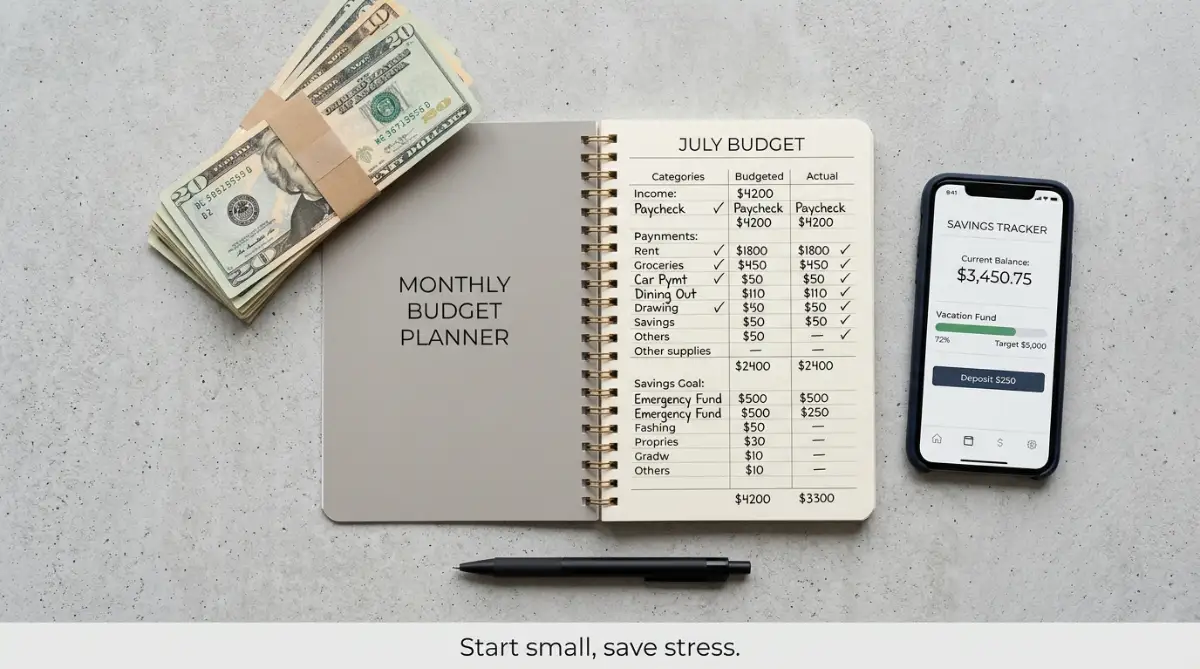
Your Step-by-Step Blueprint to Save When Your Bank Account is Empty
Building a financial safety net does not require you to win the lottery or get a massive promotion tomorrow. It starts with small, smart shifts in how you handle the money you already have.
Let us explore some highly practical, realistic steps to help you build your very first emergency cushion from scratch.
Step 1: Uncover Hidden Money in Your Daily Routine
Most people believe they have absolutely zero money left over at the end of the month. However, small cash leaks are often hiding in plain sight within our daily routines.
Think of your monthly income like a bucket of water. If the bucket has five tiny pinholes, the water will slowly drain out before you can ever use it.
The Micro-Spending Bucket Concept:
- Your Income Inflow: This is the money flowing directly into your main budget bucket.
- The Small Unnoticed Leaks: Daily coffees, unused app subscriptions, and frequent dining out act like tiny pinholes, slowly draining your cash.
- Your Big Expenses: The remaining water goes toward your major monthly bills, leaving your bucket completely empty at the end of the month.
To find these leaks, you do not need a complex financial degree or difficult math. Simply look at your bank statements from the past thirty days with a yellow highlighter.Mark every single purchase that was not absolutely required for your basic survival.
This includes forgotten streaming services, quick takeout meals, or convenient daily snacks.
You will likely find at least thirty to fifty dollars of quiet spending that you barely even remember. That forgotten money is the exact starting point for your new safety net.
Before we move on to setting up your secret savings vault, watch this quick video to see exactly how I found an extra $100 hidden in my own messy monthly budget. Once you see how easy it is to plug these cash leaks, you will be highly motivated to try the rest of the steps below!
Step 2: Set Up a Separate Out-of-Sight Savings Vault
If your savings account sits right next to your checking account, you will eventually spend that money. It is simply human nature to spend cash when we see it available.
To prevent this temptation, you need to open a completely separate account at a different bank. Look for a bank that does not charge monthly fees or require a high minimum balance.
Separating Your Money for Safety:
- Checking Account (Daily Spending): This account is easy to access, which makes it highly vulnerable to quick impulse purchases.
- Savings Account (Hard to Reach): This account is kept safe from your daily spending urges because it sits in a completely separate bank.
Many online banks offer excellent, free high-yield savings accounts that are perfect for this goal. These accounts keep your emergency cash completely separate from your daily spending money.
By keeping this money out of sight, you mentally train yourself to pretend that the money does not exist. It takes a few days to transfer money back to your main account, which stops impulsive spending in its tracks.
Step 3: Run a Short "No-Spend" Weekend Challenge
Trying to save money for an entire year can feel incredibly overwhelming and exhausting. Instead of aiming for long-term goals right away, try a short-term challenge to build your confidence.
Challenge yourself to a single "no-spend" weekend once or twice every month. During these forty-eight hours, you commit to spending absolutely zero money on non-essential items.
Smart Spending Swaps for Your Savings Weekend
- Food and Drink Swaps:
- What to Avoid: Fast food, busy restaurants, and daily coffee shop visits.
- Smart Free Alternative: Cook simple, warm meals at home using the ingredients you already have in your kitchen pantry.
- Entertainment Swaps:
- What to Avoid: Pricey movie tickets, wandering through shopping malls, and attending paid events.
- Smart Free Alternative: Go for a relaxing walk in a local public park, or watch free, high-quality documentaries online at home.
- Travel Swaps:
- What to Avoid: Booking paid rides on apps, or taking unnecessary car trips that waste expensive fuel.
- Smart Free Alternative: Walk to your nearby destinations, ride a bicycle, or simply stay home to rest and read a favorite book.
This simple challenge forces you to get creative and find free ways to enjoy your time. You can invite friends over for a board game night instead of going out to an expensive dinner.
Any money you successfully avoid spending during this weekend must go directly into your new savings vault. You will be amazed at how quickly an extra forty or fifty dollars can accumulate from just two days of mindful living.
Step 4: Automate the Smallest Amount Possible
One of the biggest mistakes people make is trying to save too much money too quickly. They try to save one hundred dollars a week, fail immediately, and then give up on the idea entirely.
My biggest mistake early on was trying to save fifty dollars a week, which only left me broke and forced me to use my credit card for regular groceries. Once I lowered my goal to just five dollars a week and moved it to a completely different bank, my savings finally started to grow without me even noticing.
Instead, start with an amount so small that you will not even notice it leaving your paycheck. Start by saving just five or ten dollars every single week.
The Power of Small, Consistent Savings
- Every Single Week: Save a small, unnoticed amount of just $10.
- After Six Months: Quietly build a helpful $260 cash cushion.
- After One Full Year: Secure a strong $520 emergency safety net.
Set up an automatic transfer through your online banking app to move this small amount every payday. Because the transfer happens automatically, you do not have to make a hard decision to save each week.
As you get comfortable living without that tiny amount, you can slowly bump it up to fifteen or twenty dollars. This slow approach builds a strong saving habit without causing any stress to your current budget.
Step 5: Convert Your Clutter into Immediate Cash
Almost every home has unused items gathering dust in closets, drawers, or under the bed. These items represent real cash that is currently frozen and doing nothing to help your life.
Take one hour this weekend to search your home for things you no longer use or need. Look for old smartphones, clothes that do not fit, books, or extra kitchen tools.
Unused Item in Your Closet → List on a Free Online Marketplace → Receive Fast Cash in Hand → Deposit Directly into Savings Vault
You can easily list these items on free local online marketplaces to find buyers in your area. Selling just two or three unused items can easily generate your first one hundred dollars.
This quick win provides a massive psychological boost to your savings journey. Seeing that first hundred dollars sitting safely in your account will inspire you to keep going.
Step 6: Use the "Twenty-Four Hour Pause" Rule
Impulse buying is one of the most common ways that hard-earned money slips through our fingers. Retail stores and online shopping apps are carefully designed to make us buy things instantly.
To combat this, protect your money by using the simple twenty-four hour pause rule. Whenever you want to buy something that is not an absolute necessity, force yourself to wait one full day.
During those twenty-four hours, the initial excitement of shopping will naturally fade away. You will often realize that you do not actually need or even want the item as much as you thought.
If you still want it after a day, you can plan for it, but most times you will gladly walk away. This simple rule saves you hundreds of dollars over the course of a single year.
Myth vs. Reality: The Truth About Saving Money
Many people hold onto false beliefs that stop them from ever starting their savings journey. Let us look at the facts.
- Myth: You need a high-paying job to save money.
- Reality: Saving is about your spending habits, not just your income. Small amounts saved consistently will always beat large amounts saved occasionally.
- Myth: Saving a few dollars a week is a waste of time.
- Reality: Small savings create a powerful habit. A fifty-dollar cushion can prevent you from using a high-interest credit card for a minor emergency.
Step 7: Safely Boost Your Income with Micro-Tasks
If you have already trimmed your budget as much as possible, the next step is to increase your income slightly. You do not need to take on a stressful second full-time job to make a difference.
Look for simple micro-tasks or local odd jobs that you can do during your spare free hours. This could include pet sitting for a neighbor, washing cars, or offering basic freelance help online.
Dedicate every single dollar earned from these extra activities directly to your emergency fund. Since this money is extra, you will not miss it in your regular weekly household budget.
With consistent effort, these small side tasks will quickly turn your small savings jar into a rock-solid financial wall. You will finally sleep soundly, knowing that a sudden car noise or surprise bill cannot hurt your family.
Next-Level Tactics to Multiply Your Emergency Savings Effortlessly
You have already started your journey by saving small amounts of money from your regular income. Now, it is time to look at some advanced ways to grow your money faster without feeling any extra pain. These expert secrets will help you build a solid wall of cash in a much shorter period.
One of the most powerful secrets to building a safety net is using unexpected windfalls. A windfall is any extra money that comes your way that you did not plan for in your normal budget. It could be a small cash gift, a bonus at work, or even a tax refund.
Instead of spending this money on temporary pleasures, commit to saving at least half of it immediately. Since you did not expect this money, your daily life will not change when you put it in savings. This is a fast way to supercharge your progress without feeling any budget squeeze.
To keep your savings goals highly organized, you can follow simple guidelines set by trusted financial institutions. For instance, the Consumer Financial Protection Bureau recommends keeping a dedicated savings account that is kept separate from your daily money. Having this clear separation prevents you from accidentally spending your safety net on non-essentials.
Another advanced tip is to audit your recurring monthly bills once every six months. Call your internet provider, mobile phone carrier, or car insurance company and politely ask for a lower rate. Many companies have unadvertised discounts that they only share with customers who actively ask.
If you can save just fifteen dollars on your phone bill and ten dollars on your internet, that is an extra twenty-five dollars for your savings vault. This extra money can go directly toward your savings goal without changing your standard of living. It is like finding free money that was already yours but was going to waste.
Let us look at a simple scenario showing how small monthly cuts can add up over a single year.
How Small Monthly Cuts Build Big Annual Savings
- Phone Bill Negotiated: Save $15 every month → Grows to $180 saved in one full year.
- Streaming Subscriptions Cut: Save $12 every month → Grows to $144 saved in one full year.
- Dining Out Reduced Slightly: Save $30 every month → Grows to $360 saved in one full year.
- Total Extra Emergency Cash: Save $57 every month → Grows to a solid $684 saved in one full year.
This extra money is more than enough to cover a sudden car repair or a minor medical bill. It shows that you do not need a massive salary to build a helpful savings shield. You only need to pay attention to where your money is currently sleeping.
Once you have saved your first five hundred dollars, you should consider where you store your cash. Keeping it in a standard checking account makes it too easy to spend and earns almost zero interest. Placing your money in a high-yield savings account ensures that your money grows quietly on its own.
This simple step turns your passive money into an active tool that works for you day and night. Over time, that interest adds up and helps protect you against the rising prices of daily goods. It is a simple way to make sure your safety net stays strong.
Do not worry about making your savings plan perfect right from the start. Focus on building consistency because a strong habit is far more valuable than a one-time large deposit. This structured approach keeps you moving forward even when life gets busy.
Let us explore some common questions people ask when they want to make their money grow faster.
Q&A: Expert Advice for Long-Term Growth
Should I pay off my debt first or save for emergencies first?
We recommend doing both at the same time by starting small. If you pay off debt but have no savings, any new emergency will force you to borrow more money. Having a small five-hundred-dollar emergency fund breaks this vicious cycle.
How do I know if my savings are growing fast enough?
Any growth is good growth, so do not compare your progress to others. If your account has more money today than it did last month, you are winning the game. Focus on your personal journey and celebrate every single dollar you save.

Critical Mistakes That Can Destroy Your Hard-Earned Savings
Starting a savings plan is highly exciting, but it is very easy to fall into dangerous traps along the way. If you are not careful, these mistakes can wipe out your hard work in a single day. Let us look at these pitfalls so you can protect your growing fund.
The biggest mistake people make is using their emergency fund for things that are not actual emergencies. A weekend trip, a flash sale on your favorite shoes, or a discounted gadget might feel urgent, but they are not emergencies. An actual emergency is something that threatens your health, your shelter, or your ability to earn an income.
If you constantly dip into your vault for small wants, the money will not be there when a real crisis strikes. To stop this from happening, write down a clear list of what counts as a true emergency for you. Keep this list on your phone to remind you of your boundaries when you feel tempted.
Another common trap is keeping your savings in a place where they are too easy to spend. If you can transfer money to your checking account with one tap, you will eventually use it on emotional purchases. Learning why we shop when we are sad is an important lesson you can learn to stop this habit.
This helpful guide explains how temporary feelings like sadness or stress can trick us into spending money we should be saving. Recognizing these triggers helps you pause and make better decisions for your financial future. It ensures that your safety net remains untouched until a real emergency happens.
Additionally, many people feel deeply discouraged when a small emergency happens and drains their brand-new savings account. They feel like they failed and decide to stop trying to save altogether. But that is exactly what the emergency fund was created to do in the first place.
When you use your savings to cover a surprise bill, you did not fail; you actually succeeded because you did not have to borrow money. When you have to pay for a setback, use it as a learning moment and start rebuilding your fund slowly. A setback is just a normal part of life, and having some cash to cover it is a massive victory.
If you do end up using high-interest credit cards because your fund was not ready, your credit score might take a temporary hit. However, you can always recover by following a guide to raising your credit score to get back on solid ground. This step-by-step advice will help you rebuild your financial standing after any unexpected crisis.
Avoid the temptation to compare your savings progress with what other people are doing on social media. Everyone has a different starting line, and your only real competition is your own past self. Focusing on your own daily choices is the best way to ensure long-term success.
Your Roadmap to Lasting Financial Peace
Building a safety net from nothing might seem like an impossible mountain to climb when you start. But remember that every single mountain is climbed one small step at a time. You do not need to save thousands of dollars today to make a meaningful difference in your daily life.
Having even one hundred dollars set aside gives you more security than most people have. A recent study by the Federal Reserve Board shows that many adults cannot cover a small surprise expense with cash. By starting today, you are actively choosing to put yourself in a much safer position.
This small safety net represents peace of mind, better sleep, and the power to handle life's surprises without panic. You are taking control of your financial future, and that is something to be incredibly proud of. To help you take action right away, here is a simple plan you can start using tomorrow morning.
Action Plan for Tomorrow Morning
To help you get started without any delay, we have created a simple checklist of daily actions. These small steps will help you build your momentum quickly and easily.
- Audit Your Last Statement: Take ten minutes to find three small, unneeded expenses you can cut.
- Open a Dedicated Account: Find a free online high-yield savings account and set it up.
- Automate Your First Deposit: Set your banking app to transfer just five dollars every week automatically.
By taking these simple steps, you are actively choosing safety and freedom over constant stress and worry. The path to financial comfort does not belong to the rich; it belongs to those who start small and stay consistent. I believe in your ability to build this safety net and change your life for the better.
Start today, stay patient with yourself, and enjoy the wonderful feeling of watching your safety wall grow day by day. Your future self will thank you for the smart choices you are making right now. You have the power to protect your family and live a life free of financial fear.
Looking back at that cold night on the highway, I never thought I would eventually have a solid safety net that lets me sleep soundly. If I can slowly build my emergency fund starting from basically zero, I know for a fact that you can do this too. Take that first tiny step today, and I promise your future self will be incredibly thankful.
Disclaimer: The information provided in this article is for educational and informational purposes only and should not be construed as professional financial advice. Please consult with a certified financial planner or qualified financial advisor before making any major financial decisions.