Why Staring at the Ceiling Has Become Your Nightly Routine
Picture this familiar scenario. You feel completely exhausted after a long day of working, running errands, and managing your daily responsibilities. Your eyes are heavy, and your body is begging for rest.
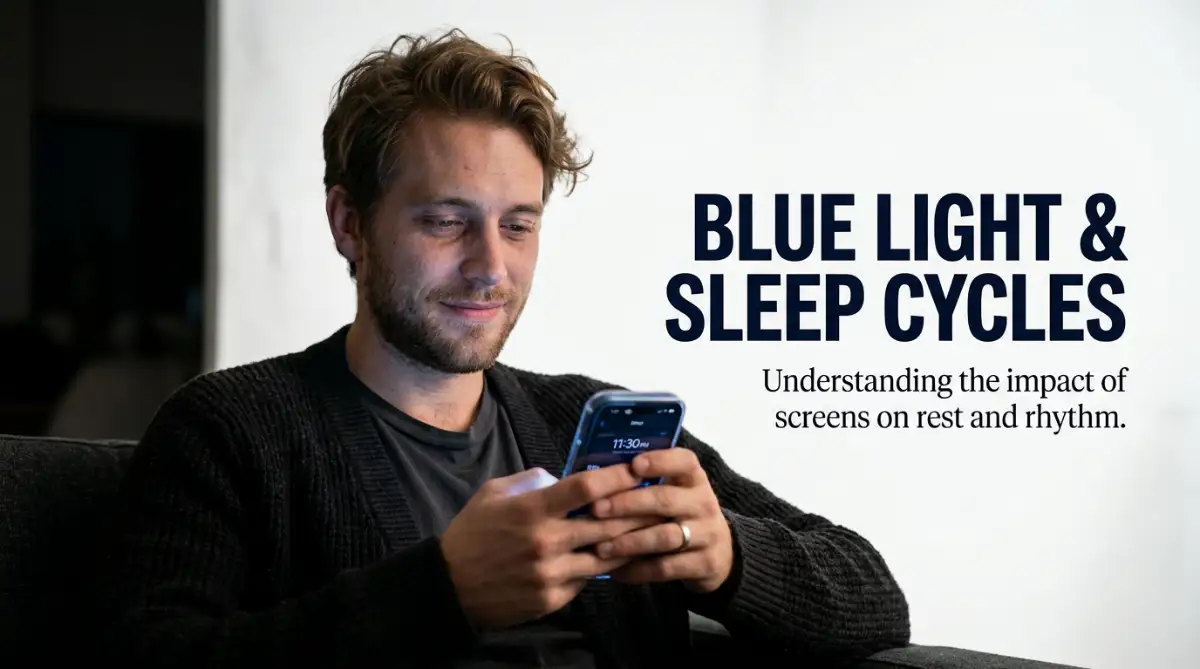
For years, I struggled with this exact problem. I would drag myself to bed feeling so tired my bones hurt, only to spend the next two hours scrolling through random videos on my phone. By the time I finally put the device away, my eyes were burning but my brain was wide awake, leaving me staring angrily at the dark ceiling. I realized I was actively destroying my own rest, and that honest moment changed everything for me.
You finally crawl into bed, pull up the blankets, and decide to check your phone just one last time. Maybe you want to watch a short video, reply to a quick message, or scroll through your social media feed to unwind.
Thirty minutes pass. Then an hour.
When you finally put the phone down, something frustrating happens. That heavy, sleepy feeling is completely gone. You close your eyes, but your brain feels like it is running a marathon.
You toss and turn, feeling the anxiety build up as you watch the clock tick closer to morning. You calculate how few hours of rest you have left, which only makes you feel more stressed out.
This is not just a random coincidence or a sign that you drank too much coffee. It is a direct result of how the glowing screen in your hands interacts with your brain. We often blame our busy schedules for our lack of rest. But the truth is, the silent glow of our devices is quietly stealing our peace of mind.
Millions of people wake up feeling groggy, irritated, and unmotivated simply because their nightly digital habits are confusing their natural biology. The struggle is real, and it affects your mood, your productivity, and your overall happiness the very next day.
What Actually Happens When Your Eyes Meet the Screen Glow?
To fix a problem, we first need to understand exactly how it works. Our bodies have an amazing internal clock called the circadian rhythm.
Think of this internal clock as a strict manager. It tells your body when it is time to be awake, alert, and active. It also tells your body when it is time to slow down, relax, and prepare for rest.
For thousands of years, this clock was perfectly synced with the sun. When the sun went down, the darkness signaled our brains to start releasing melatonin, the hormone responsible for making us feel sleepy.
The Silent Sleep Thief Hiding in Your Pocket
Every time you pull your smartphone out in the dark, you are essentially staring directly into a miniature sun. Our phones, tablets, and laptops are heavily engineered to blast our eyes with a sharp, high-energy glow that looks amazing but completely confuses our natural biology.
Your brain is incredibly smart, but it cannot tell the difference between natural afternoon sunlight and the artificial glare of a digital screen. When this intense light hits your eyes late at night, your internal clock gets tricked into thinking the day is just beginning.
Because of this confusion, your brain instantly hits the emergency brakes on melatonin—the natural, soothing chemical responsible for making you feel peacefully drowsy.
This creates a deeply frustrating internal battle. Your muscles might ache, and your physical body might be begging for rest after a long day. However, without that essential melatonin flowing through your bloodstream, your brain feels like it just drank a massive cup of coffee, leaving you wide awake and completely unable to shut your mind off.
The Brain's Confusion Between Day and Night
Want to see exactly how this sneaky screen light tricks your brain into staying awake? Check out this quick video below, and then keep reading to discover the simple habits that will fix your routine tonight!
This confusion creates a massive problem for your overall health. When you force your brain to stay awake with digital screens, you are fighting against your own biology.
It is like trying to drive a car while pressing both the gas pedal and the brake at the same time. You end up feeling stressed, wired, and completely unable to relax naturally.
Understanding this biological reaction is the first step toward getting your nightly rest back on track. You are not a bad sleeper; your environment is just sending the wrong signals to your brain.
Practical Habits to Reclaim Your Nightly Rest
Now that we know the science behind the problem, how do we actually fix it? The good news is that you do not need to throw your phone away or move into a cave.
Small, intentional changes to your daily routine can make a massive difference. Let us explore some highly effective, science-backed strategies you can start using tonight.
Creating a Tech-Free Twilight Zone
One of the most powerful habits you can build is creating a buffer zone between screen time and sleep time. I like to call this the Tech-Free Twilight.
Try to completely disconnect from all bright screens about one hour before you plan to close your eyes. This gives your brain the exact amount of time it needs to realize that night has arrived.
During this hour, your melatonin levels will naturally begin to rise. You will start feeling that pleasant, heavy drowsiness that leads to deep, restorative slumber.
The Power of Physical Alternatives
You might be wondering, "What am I supposed to do for a whole hour without my phone?" This is a great opportunity to rediscover physical activities that calm your mind.
You could read a physical book under a warm, dim lamp. You might try doing some light stretching to release the physical tension from your muscles.
Even simple tasks like folding laundry, writing in a physical journal, or listening to calm music can act as amazing signals to your brain that the day is over. The goal is to keep your eyes away from direct, glowing light.
Myth vs. Reality: The Truth About Blue Light Blockers
With so much talk about digital eye strain, many companies have started selling special glasses and screen protectors. But do they actually work, or are they just a marketing trick?
Let us break down the facts in a simple way so you can make informed decisions.
Tweaking Your Smartphone Settings for Better Rest
If you absolutely must use your phone in the evening, you should make your device work for you, not against you. Almost every modern smartphone has built-in tools to help protect your eyes.
Look for features like Night Shift on Apple devices or Eye Comfort Shield on Android phones. These settings change the color temperature of your screen from a bright, icy white to a soft, warm orange.
Automating Your Evening Environment
Do not rely on your memory to turn these features on every single night. You will likely forget when you are busy or distracted.
Instead, go into your phone settings and set these features on an automatic schedule. Have them turn on exactly when the sun goes down in your local area.
When your screen naturally shifts to a warm amber color in the evening, it serves as a gentle reminder to start wrapping up your digital activities. It is a small digital boundary that creates a big difference in how your eyes feel.
My biggest mistake used to be trusting myself to manually put the phone away when it got late. I finally admitted defeat and started using a free app blocker that completely locks my social media at 9 PM. It felt a bit annoying at first, but taking that choice out of my own hands totally saved my sleep schedule.
The 20-20-20 Rule for Evening Viewing
If you have to work late on a computer, your eyes take a heavy beating. This can cause headaches and make relaxing even harder.
Try using the 20-20-20 rule. Every 20 minutes, look away from your monitor and focus on an object that is at least 20 feet away, for a total of 20 seconds.
This simple practice relaxes the muscles in your eyes. It prevents the dry, burning sensation that often keeps people awake long after they have closed their laptops.
Expert Insight: Small Tweaks for Massive Changes
Pro Tip for Better Mornings:
Do you charge your phone right next to your pillow? This is a dangerous trap! When your phone is within arm's reach, the temptation to grab it when you cannot sleep is extremely high. Try moving your charger across the room. If you use your phone as an alarm, this forces you to physically get out of bed to turn it off, which completely cures the habit of morning snoozing!
How Daytime Habits Influence Your Nighttime Rest
It might sound strange, but a great night of rest actually begins the moment you wake up. Your daily habits have a huge impact on how easily you fall asleep hours later.
We often focus so much on what we do at night that we forget about our morning routines. Your internal clock needs strong, clear signals throughout the whole day to function properly.
Getting Natural Sunlight Early
The single best thing you can do for your sleep cycle is to get natural sunlight in your eyes shortly after waking up. Aim for at least 10 to 15 minutes of direct outdoor light every morning.
This morning light acts as a powerful reset button for your brain. It stops the production of melatonin completely and tells your body that a new day has officially started.
When your brain gets a strong "morning" signal, it can easily calculate exactly when it needs to send the "nighttime" signal 14 to 16 hours later. A bright morning guarantees a sleepy evening.
Managing Caffeine and Screen Breaks
Another common mistake is treating our bodies like machines that can run endlessly on caffeine and bright monitors. Coffee is great, but it can easily hide how tired you really are.
Try to stop drinking caffeine at least eight hours before you plan to go to bed. This gives your liver enough time to process the chemicals so they do not interfere with your evening relaxation.
Combine this with taking short, screen-free walking breaks during your workday. By reducing your overall daily exposure to artificial glare, your nervous system remains much calmer.
When evening finally arrives, your body will naturally welcome the transition into darkness. You will find yourself falling into a deep, peaceful slumber without staring at the ceiling in frustration.
Mastering Your Nightly Routine: Expert Strategies for Deep Rest
You already know that staring at your phone is a bad idea. But what about the other lights in your environment? Overhead lighting in your bedroom can be just as harmful as your glowing screens.
Most standard LED bulbs emit a massive amount of invisible blue light. This tricks your nervous system into staying highly active long after you finish dinner. To fix this, swap out your main bedroom bulbs for warm, amber-toned alternatives.
You can also rely entirely on small table lamps placed below eye level. This mimics the setting sun, which naturally signals your brain that resting time is approaching. When you control your environment, your body naturally follows along.
The Magic of Red Light Therapy
If you want to take your evening routine to the next level, consider introducing red light into your space. Red wavelengths are incredibly soothing and do not disrupt your internal clock at all.
Many top athletes and health experts use dedicated red light bulbs in their bedside reading lamps. It creates a deeply relaxing atmosphere that prepares your body for instant slumber. You can even find cheap plug-in nightlights that emit a soft red glow.
This simple trick prevents you from turning on bright hallway lights during late-night bathroom trips. It protects your fragile sleep state from sudden shocks of brightness. Your eyes will stay relaxed, and your brain will stay in a deeply peaceful mode.
Healing Your Eyes Before Bed
Long hours of screen time leave your eye muscles tight, dry, and fatigued. This physical discomfort can quietly prevent you from falling into a deep state of rest. A great habit is practicing focused relaxation techniques specifically for your face.
For instance, lightly massaging your temples or using a warm, damp towel over your eyelids can work wonders. If you want a complete breakdown of these recovery methods, you can explore how to relieve screen eye strain naturally to build a better evening routine. Relaxed facial muscles send a powerful, calming signal directly to your nervous system.
The Cognitive Wind-Down Protocol
Sometimes, the problem is not just the physical light hitting your eyes. The type of content you consume right before bed plays a massive role in your rest quality. Scrolling through stressful news or worrying about common debt consolidation myths will release cortisol, the stress hormone.
Cortisol completely blocks your body's ability to relax and drift off smoothly. Instead, you need a cognitive wind-down protocol to clear your thoughts. This means shifting your brain from active problem-solving mode into passive relaxation mode.
Try listening to an audio story, a calm podcast, or a guided meditation in the dark. These audio formats keep your eyes away from screens while keeping your mind gently occupied. According to the American Academy of Ophthalmology, managing how and when we use digital devices is our best defense against long-term visual fatigue.
Temperature and Technology: The Hidden Connection
Believe it or not, your smartphone actually produces a small amount of physical heat. When you hold it close to your face in bed, it slightly raises your core temperature. Our bodies naturally need to drop in temperature by a few degrees to fall asleep effectively.
Keeping electronics completely out of your bed helps maintain a cool, comfortable resting environment. Try turning down your room thermostat to around 65 degrees Fahrenheit right before you start your evening routine. A cooler room combined with zero screen glare is a powerful combination for deep slumber.
You can also try taking a warm shower about an hour before laying down. When you step out of the warm water, your body temperature rapidly drops to adjust to the room. This biological drop triggers extreme drowsiness, totally overriding any leftover digital stimulation.
The Phased Shutdown Method
Many highly successful people use a specific timeline to gradually power down their minds. Think of your brain like a high-speed train moving down the tracks. It cannot suddenly stop on a dime; it needs a long, smooth runway to slow down safely.
Start by stopping all work-related tasks at least two hours before bed. This stops the flow of stressful emails and tight deadlines from lingering in your thoughts. Your mind desperately needs this gap to transition from a state of production to a state of peace.
Then, cut off all bright screens exactly one hour before closing your eyes. During this final hour, you only engage in low-energy, relaxing activities. This phased approach guarantees that your body is biologically ready for rest exactly when you need it to be.
The Silent Mistakes Ruining Your Nightly Recovery
The "Just One More Episode" Illusion
We have all experienced this familiar trap. You finish an episode of your favorite show, and the streaming service immediately starts playing the next one. You tell yourself that you will only watch five more minutes before sleeping.
Suddenly, two full hours have vanished into the night. This happens because modern entertainment platforms are specifically designed to keep your eyes locked on the screen. They hijack your brain's reward system with constant, tiny hits of dopamine.
This dopamine rush completely masks how tired your physical body really feels. By the time you finally turn the television off, your nervous system is on high alert. You end up lying in the dark, feeling completely wired and exhausted at the exact same time.
The Late-Night Productivity Trap
Many ambitious people believe that late-night quiet time is perfect for catching up on work. You might sit in bed with your laptop, trying to answer just a few more emails. This is actually one of the most dangerous habits for your long-term health.
Not only are you flooding your eyes with direct artificial glare, but you are also associating your bed with work stress. Your brain slowly forgets that the mattress is a safe place meant only for sleeping. Instead, it starts preparing for work and anxiety the moment your head hits the pillow.
This habit also forces you into terrible physical positions. Sitting hunched over a laptop is exactly why your ergonomic chair is still causing lower back pain during the daytime. You are carrying that physical tension straight into your resting hours, creating an endless cycle of discomfort.
The Midnight Bathroom Blunder
Imagine waking up in the middle of the night needing a glass of water. You stumble into the kitchen and flip the main overhead light switch. Boom! A blinding flash of bright white light instantly hits your retinas.
In that single second, your brain receives a massive shock of energy. It assumes the sun has suddenly risen, and it immediately stops releasing sleep hormones. When you return to bed, you will likely spend the next hour tossing and turning in total frustration.
To avoid this painful mistake, install dim motion-sensor nightlights in your hallway and bathroom. Keep the lighting as low and warm as safely possible. You want to navigate your home while keeping your brain in a deep, uninterrupted state of rest.
Relying on Supplements Instead of Better Habits
Many people try to fix their broken routines by swallowing a melatonin pill every single night. While these supplements can be helpful for jet lag, they are not a permanent solution for bad habits. Relying on pills while continuing to stare at bright screens is highly counterproductive.
It is exactly like eating a giant piece of cake while running on a treadmill. You are actively fighting against your own health efforts. The artificial light neutralizes the supplement, leaving you feeling groggy, confused, and groggy the next morning.
Instead of buying expensive quick fixes, focus on repairing your natural biological clock. According to the National Heart, Lung, and Blood Institute, maintaining a consistent and natural sleep schedule is the foundation of long-term physical recovery. A pill can never replace the healing power of natural darkness.
The "Smart Home" Paradox
We live in an era where our homes are filled with glowing gadgets and blinking lights. From internet routers to smart speakers, these tiny lights pollute your sleeping environment. Even a tiny glowing dot on a television can disrupt a deeply sensitive sleeper.
People often ignore these small lights because they seem harmless compared to a bright smartphone. However, in a pitch-black room, these tiny beams of light act like lasers pointing at your closed eyelids. Your eyes are highly sensitive and can detect this glow even while you are deep in slumber.
Take a roll of black electrical tape and cover every single standby light in your bedroom today. You will be absolutely amazed at how much darker and more peaceful your room feels. A completely pitch-black environment is a non-negotiable requirement for high-quality, restorative recovery.
Your Action Plan for Waking Up Refreshed
The journey to better rest does not require a massive lifestyle overhaul. It simply requires a few smart, intentional choices when the sun starts to set. You have the ultimate power to take control of your environment and guide your body toward the recovery it deserves.
By respecting your internal clock, you are giving yourself the greatest gift of health. You will wake up with sharper focus, a brighter mood, and a genuine sense of limitless energy. Those miserable mornings of dragging yourself out of bed can quickly become a thing of the past.
A Simple Checklist for Tonight
Let us make this incredibly practical and easy to follow. Do not try to change everything all at once, as that often leads to frustration. Pick just one or two things from this list to try this very evening.
First, try moving your device charger to a completely different room, like the kitchen. This single action eliminates almost all the temptation to scroll late into the night. It creates a strong physical barrier between you and your digital distractions.
Second, dim the overhead lights in your home at least one hour before lying down. Switch to soft lamps and give your eyes a much-needed break from the brightness. Let the natural, fading light slowly calm your racing thoughts.
The Promise of Better Mornings
Finally, replace your digital entertainment with something physical and deeply soothing. Open a good book, listen to some soft instrumental music, or simply practice deep breathing in a comfortable chair. These quiet moments are not just about falling asleep; they are about finding real peace at the end of a chaotic day.
You deserve to feel amazing when you wake up each morning. You deserve to tackle your personal goals with a clear mind and a deeply rested body. Put the screen down tonight, embrace the quiet darkness, and watch how quickly your daily life transforms for the better.
Take small steps, stay incredibly consistent, and your body will absolutely thank you tomorrow morning. Sweet dreams and happy healing!
Trust me, I know how hard it is to break the late-night scrolling habit, but waking up full of energy is worth way more than looking at a few more pictures online. If I could transform my own messy nights into a peaceful routine, I am totally confident you can do the exact same thing starting right now. Start tonight, and give yourself the gift of a truly great morning!
Disclaimer: The information provided in this blog post is for educational and informational purposes only. It is not intended to be a substitute for professional medical advice, diagnosis, or treatment. Always seek the advice of your physician or a qualified healthcare provider regarding any chronic sleeping issues or medical conditions.