How Rising Interest Rates Silently Squeeze Your Family Budget
Imagine opening your bank account on a quiet Sunday morning. You expect to see your normal balances, but your monthly loan payment has silently bumped up by $350.
You double-check the statement, hoping it is a technical glitch. But it is not a mistake. The underlying interest rate on your debt shifted overnight because general prices across the economy keep rising.
That extra payment means money taken directly from grocery runs, weekend outings, or home repairs. It brings a sudden spike in stress that makes you question every financial choice you made a few years ago.
Many families find themselves caught off guard by these sudden shifts. When everyday items like eggs, fuel, and electricity get more expensive, paying higher interest on debt feels like a double blow.
I have talked to many borrowers who felt completely helpless during these periods. They did not realize how fast a shift in economic conditions could turn an affordable monthly budget into a tight squeeze.
The real challenge is that debt decisions are often made during stable economic times. When inflation rises unexpectedly, those old choices come back with massive consequences for your wallet.
Decoding the Mechanics: How Fixed and Variable Loans Actually Work
To make smart borrowing choices, you need a clear look at how both loan types operate under normal conditions. The differences seem simple on paper, but they behave very differently when markets change.
What Is a Fixed Rate Loan?
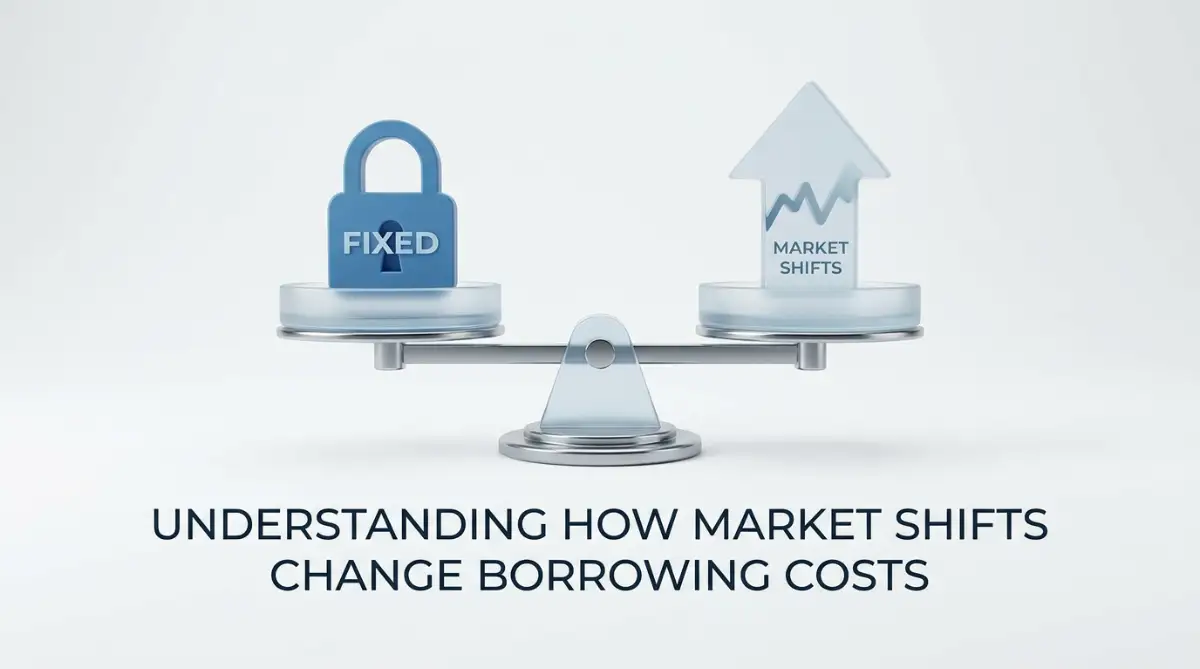
A fixed rate loan locks in your interest rate for a specific timeframe or the full duration of the debt. That means your interest percentage remains identical whether market rates rise or crash.
Your monthly principal and interest payment stays 100% predictable. If your payment is $1,200 today, it will remain $1,200 next month and five years from now.
Here is a quick real-life scenario:
- Borrower: Alex locks in a $250,000 mortgage at a 4.5% fixed rate.
- Market Situation: Inflation surges, and central banks push rates up across the country.
- Alex's Outcome: Alex continues paying the exact same monthly amount without feeling direct rate bumps on his mortgage.
What Is a Variable Rate Loan?
A variable rate loan (sometimes called an adjustable rate loan) connects your interest rate directly to a standard benchmark, such as a prime rate.
When the benchmark interest rate moves up or down, your loan's interest rate adjusts alongside it. This means your monthly cost fluctuates throughout your repayment period.
Let us look at a contrasting scenario:
- Borrower: Maya takes out a $250,000 loan at a 3.0% variable rate.
- Market Situation: Central banks raise benchmark rates to curb rising prices.
- Maya's Outcome: Her variable rate rises step-by-step from 3.0% up to 6.0%. Her monthly payment shoots up by hundreds of dollars.
Why Inflation Forces Interest Rates to Shift
Understanding the link between general inflation and your bank's interest rate helps you anticipate loan movements before they happen.
When prices for goods and services rise rapidly, central banks step in to cool off spending. Their primary tool to fight high inflation is raising benchmark interest rates.
When central banks raise rates, borrowing money becomes more expensive for commercial banks. Those banks then pass the higher costs down to consumers holding variable debt.
Inflation Cost Chain:
High Inflation ➔ Central Banks Raise Rates ➔ Variable Loan Rates Jump ➔ Monthly Payments Rise
If you hold a variable rate loan, you feel this adjustment almost immediately. Your loan contract allows the bank to change your charge based on economic benchmarks.
If you hold a fixed rate loan, you are insulated from these immediate changes during your fixed term. The central bank can raise rates multiple times, but your contract protects your rate.
Direct Comparison: Fixed vs Variable Rates During Inflation
To help you compare both options quickly, here is a detailed breakdown of how each loan structure performs when prices are rising:
Common Loan Myths Exposed
Let us clear up some frequent misunderstandings that often cause borrowers to lose money during inflationary periods.
Myth 1: "Variable rate loans are always cheaper because they start lower."
The Reality: While variable loans often begin with lower initial promotional rates, a single cycle of sharp interest rate increases can easily wipe out those early savings. Over a long term, variable costs can skyrocket past fixed options.
Myth 2: "Fixed rate loans completely protect you from inflation forever."
The Reality: Fixed rates protect you only for your current term contract (such as 3, 5, or 10 years). If your fixed term ends while inflation and interest rates are high, your renewal rate will reset at much higher market levels.
Analyzing Long-Term Cost Differences: A Tale of Two Borrowers
To clearly understand the overall financial impact, let us examine how two different borrowers experience a high-inflation cycle over five years.
Scenario A: David Chooses a Fixed Rate
David signs a 5-year fixed loan for $300,000 at an interest rate of 4.0%.
- Year 1 Monthly Payment: $1,432
- Year 3 Monthly Payment: $1,432 (despite inflation climbing)
- Year 5 Monthly Payment: $1,432
- Total Interest Paid Over 5 Years: Approximately $56,000
- David's Experience: He maintained complete financial predictability and avoided budgeting surprises.
Scenario B: Sarah Chooses a Variable Rate
Sarah takes a 5-year variable loan for $300,000 starting at a discounted 3.0%.
- Year 1 Monthly Payment: $1,265 (She saves money initially)
- Year 2 Inflation Surge: Central bank hikes push her rate to 4.5%. Payment rises to $1,510.
- Year 3 Continued Hikes: Her rate rises further to 6.0%. Payment jumps to $1,798.
- Year 4 & 5 High Plateaus: Rate sits at 6.5%. Payment reaches $1,895.
- Total Interest Paid Over 5 Years: Approximately $78,000
- Sarah's Experience: Initial savings vanished quickly, resulting in paying thousands more over the full period.
4 Practical Steps to Choose the Right Loan Structure
If you are deciding between these options, follow these practical steps to choose the safest path for your financial situation.
Step 1: Calculate Your Monthly Cash Buffer
Look closely at your income after taxes and essential expenses. Ask yourself a simple question: How much extra money can your monthly household budget handle if interest rates climb by 2% or 3%?
If your budget is tight and an extra $200 per month would cause significant strain, a fixed rate loan provides the safety you need.
If you have a large cash cushion and high income flexibility, you might be able to handle variable shifts to capture potential drops later.
Step 2: Evaluate the "Rate Spread"
The rate spread is the gap between the offered fixed rate and variable rate on the day you apply.
- Small Spread (Under 0.75%): If the fixed rate is only slightly higher than the variable rate, choosing the fixed rate is usually a safer bet.
- Wide Spread (Over 1.5% to 2.0%): If the variable rate is substantially lower, you start with larger savings that offer a temporary cushion against future hikes.
Step 3: Match the Loan Structure to Your Timeline
Consider how long you intend to keep the loan or stay in the home.
- Short-Term (1 to 3 Years): A variable rate might make sense if you plan to pay off the debt or sell the property quickly before major rate changes occur.
- Long-Term (5+ Years): A fixed rate shields your personal finances against broad economic shifts over long horizons.
Step 4: Stress-Test Your Finances Against Rate Hikes
Before signing any variable agreement, run the numbers through an online calculator using worst-case rate situations.
Check what your payment would look like at +1%, +2.5%, and +4% higher than the offered start rate. If those numbers look uncomfortable, opt for a fixed arrangement instead.
Pro Tip for Borrowers: You do not always have to choose 100% fixed or 100% variable. Many lenders offer split-rate (hybrid) loans. You can lock in 50% of your total loan amount at a fixed rate for security while keeping 50% variable to take advantage of flexibility.
Key Questions to Ask Your Lender Before Signing
When you sit down with a loan officer or broker, ask these targeted questions to get a complete picture of your true costs:
- "If I choose a variable rate, how often does the rate adjust?" (Some adjust monthly, others quarterly or annually).
- "Does this variable loan have an interest rate cap?" (A cap limits how high your rate can rise during a specific period or over the life of the loan).
- "What are the exact penalty fees if I want to switch from variable to fixed early?"
- "Are there early prepayment penalties if I pay off extra principal during my term?"
Your Roadmap to Financial Peace of Mind
Managing debt effectively when prices are rising comes down to smart risk control.
Inflation shrinks what your money can buy while driving up basic daily expenses. Adding unpredictable loan payments on top of higher groceries and utility bills creates unnecessary household stress.
Here is how to choose the right path for your situation:
- Choose a Fixed Rate if: You want complete predictability, peace of mind, and exact monthly budget safety. It allows you to plan your household spending without worrying about central bank rate hikes.
- Choose a Variable Rate if: You expect interest rates to drop soon and want the freedom to make extra lump-sum paydowns without penalty fees.
Take time today to review your family budget, test your numbers against higher interest rates, and pick the loan structure that keeps your hard-earned money safe over the long run.
Strategic Moves to Protect Your Wealth During Rate Swings
Managing a loan when prices are rising across the economy requires more than just choosing between two rate structures. You need active strategies that protect your monthly bank balance from sudden surprises.
Once you understand how interest rates move, you can use specific financial techniques to keep your long-term costs as low as possible. These methods help you stay in control of your debt regardless of broader market conditions.
Accelerating Your Principal Paydown
When interest rates rise, the proportion of your monthly payment going toward interest increases dramatically. One effective way to combat this is making extra payments directly toward your loan principal.
Even small additional payments made early in your loan term can cut years off your repayment timeline. This reduces the total balance that interest can be charged against.
To see how payments are split between principal and interest over time, take a look at understanding loan amortization schedules. Knowing how your payments are structured helps you time your extra paydowns for maximum impact.
Building an Automated Rate Buffer Account
A simple way to protect yourself against sudden variable rate hikes is creating a personal buffer account. This method removes the shock of unexpected payment increases.
Calculate what your monthly payment would be if your current interest rate jumped by 2%. Set up an automatic transfer to move that higher amount into a separate savings account every payday.
Your loan gets paid at the current lower rate, and the extra cash accumulates safely in your buffer account. If rates do jump later, you already have the funds ready to cover the difference without disrupting your daily life.
Timing Your Rate Fixes with Market Signals
If you hold a variable rate loan and see inflation climbing, you do not have to wait for your lender to adjust your costs. You can actively monitor market signals to decide when to switch to a fixed rate.
Watch central bank announcements and inflation report trends closely. When central banks signal upcoming benchmark hikes, locking in a fixed rate early can save you thousands over subsequent months.
You can learn more about consumer protections and rate adjustment guidelines through the Consumer Financial Protection Bureau guidance on loan agreements. Knowing your consumer rights helps you negotiate better terms with your lender.
The Hybrid or Split-Loan Strategy
If you cannot decide between total stability and variable flexibility, ask your lender about a split-rate loan structure. This approach divides your total debt balance into two distinct parts.
For example, you can assign 60% of your loan to a fixed rate and leave 40% on a variable rate. This structure offers a protective shield for the majority of your debt while leaving a smaller portion open to rate cuts.
Example Split-Loan Allocation ($300,000 Total Debt):
- 60% Fixed Portion ($180,000): Protected against inflation rate hikes to ensure monthly budget stability.
- 40% Variable Portion ($120,000): Remains flexible so you can make lump-sum paydowns without penalty.
This balanced setup allows you to make extra payments on the variable portion without penalty while sleeping peacefully knowing most of your debt is locked in.

Expensive Traps Borrowers Fall Into When Interest Rates Surge
When economic pressure mounts, even smart borrowers make emotional choices that end up costing them thousands in extra interest. Recognizing these traps before they happen keeps your money safe.
Panicking and Locking In at the Peak
One of the most frequent mistakes occurs when variable rate borrowers panic after several rate hikes. They decide to lock in a fixed rate when interest rates have already reached their absolute highest point.
Lenders set fixed rates based on future market expectations. By the time central banks reach the end of a rate-hiking cycle, fixed rates are priced at premium levels.
Locking in at the peak forces you to pay top dollar for years, even after broader inflation cools down and market rates begin to fall again.
Ignoring the Difference Between Headline Rates and APR
Borrowers often fall for attractive headline rates displayed on promotional banners. They switch lenders quickly without examining the true cost of the loan.
An advertised interest rate only tells part of the story. You must account for application fees, ongoing account charges, and mandatory settlement costs.
Before switching loan products, learn how to compare base interest rate vs APR differences so you can identify the genuine cost of borrowing. A lower headline rate with high hidden fees can cost more than your current setup.
Switching Loans Without Calculating Exit Penalties
When interest rates rise, changing lenders seems like an easy fix. However, breaking a loan contract early can trigger substantial penalties.
Fixed rate loans often carry break costs that lenders calculate based on complex formulas. These fees can quickly run into thousands of dollars, completely erasing any potential interest savings from a new lender.
Always request a written breakdown of all exit fees from your current lender before signing paperwork with a new institution.
Taking on New Debt to Cover Rising Loan Costs
When monthly loan payments increase, some borrowers turn to credit cards or personal loans to bridge the monthly shortfall. This creates a dangerous cycle of high-interest debt compounding on top of existing obligations.
If rising interest rates make your current debt unbearable, adding credit card balances only accelerates financial stress.
Instead of adding debt, examine options for restructuring existing liabilities. Reviewing 5 common debt consolidation myths can help you avoid costly mistakes while managing multiple balances.
You can also study historical trends in consumer borrowing and debt behavior published in the Federal Reserve educational materials. Understanding broader debt trends reinforces why adding high-cost consumer credit during inflationary periods is risky.
Real-Life Case Study: How Strategic Debt Management Saves Cash
Let us examine how a proactive strategy alters the financial journey of a borrower named Marcus.
Marcus carries a $350,000 mortgage on his primary residence. As general prices across the economy began rising, Marcus noticed that his variable interest rate had climbed from 3.25% to 5.25% in less than a year.
His monthly payment increased by over $400, putting a severe strain on his monthly household budget.
Instead of panicking and locking in his entire loan at an elevated fixed rate of 6.0%, Marcus took a multi-step approach:
- He requested a split-loan structure: Marcus converted $200,000 of his debt into a fixed-rate portion to cap his exposure to further interest rate increases.
- He kept $150,000 variable: He maintained this smaller balance on a variable rate to retain the ability to pay extra principal whenever possible.
- He automated bi-weekly payments: By switching from monthly payments to bi-weekly payments, he effectively made one extra full loan payment every year toward his principal balance.
Over a four-year period, this proactive approach saved Marcus over $18,000 in compound interest charges compared to sitting passively on a fully variable loan.
Smart Loan Management: What to Do vs. What to Avoid
To keep your debt management simple and clear, follow these straightforward guidelines when dealing with interest rate changes:
What to Do
- Audit your debt regularly: Review your interest rates, fees, and remaining loan terms every six months.
- Maintain an emergency cushion: Keep at least three to six months of living expenses in a liquid savings account.
- Make bi-weekly payments: Divide your monthly loan payment into two equal bi-weekly payments to pay down principal faster.
- Talk to your lender early: Contact your bank immediately if you anticipate difficulty making upcoming payments.
What to Avoid
- Do not ignore bank notices: Open every official letter or email from your lender regarding rate changes immediately.
- Do not select loans based solely on low intro rates: Teaser rates almost always reset to much higher levels later.
- Do not max out your borrowing capacity: Always borrow less than the maximum amount a lender approves you for.
- Do not skip the fine print: Always check break costs, conversion fees, and prepayment limits before signing.
Quick Q&A: Clearing Common Loan Doubts
Can I change my loan from variable to fixed at any time?
Most lenders allow you to convert a variable rate loan into a fixed rate loan relatively easily. However, you will be offered the fixed rates available on the day you convert, not the rates from when you originally opened the loan.
What happens if inflation drops significantly after I lock in a fixed rate?
If inflation drops and the central bank cuts rates, your fixed rate stays the same. You will continue paying the higher rate until your fixed term expires, unless you choose to pay break fees to exit early.
Are variable rate loans always riskier than fixed rate loans?
Not always. Variable rate loans offer greater flexibility, such as unlimited extra repayments and redraw facilities without penalty fees. They are less risky if you have a strong financial buffer or plan to pay off the debt rapidly.
How often do lenders change variable interest rates?
Lenders can adjust variable rates whenever economic conditions change or central banks alter benchmark rates. Some variable products adjust monthly, while others change only after scheduled central bank policy meetings.
Your Action Plan for Tomorrow: Taking Control of Your Debt
Managing debt during times of high inflation does not have to feel overwhelming. You can take immediate control of your financial future by making informed choices today.
Start by grabbing your latest loan statement and reviewing your exact interest rate, current monthly payment, and loan terms. Compare that rate with current market offers to see where you stand.
Next, run a simple stress test on your household budget. Calculate how your monthly finances would look if your rate moved up by 1% or 2%.
If that test shows potential strain, start building a rate buffer account right away or schedule a conversation with your lender to discuss fixed or split-rate options.
Taking proactive steps now gives you confidence and peace of mind. Every small action you take today protects your hard-earned money and keeps your financial goals on track over the long run.
The information provided in this article is for educational and informational purposes only and should not be considered professional financial advice. Interest rates, loan products, and lending policies vary widely based on individual circumstances and economic conditions. Always consult with a qualified financial advisor, mortgage broker, or legal professional before making significant financial decisions or altering existing loan agreements.